Two Delhis, One Unforgettable Story
Old Delhi's Mughal lanes and Red Fort meet New Delhi's stately boulevards and India Gate — a layered capital best read like a richly-textured book.
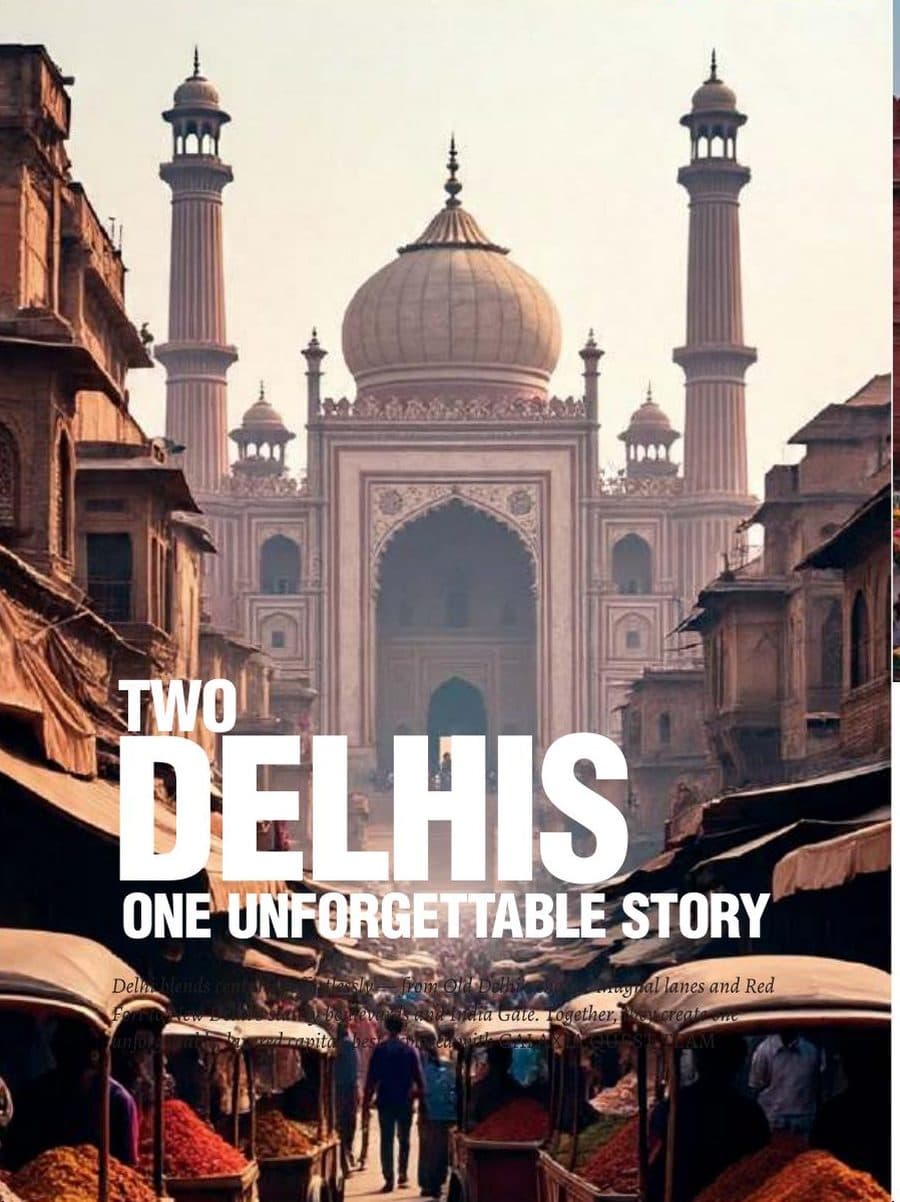
Few cities in the world wear their history and modernity as effortlessly as Delhi. For a tourist, the city unfolds like a richly layered narrative — one that moves seamlessly between the chaotic charm of Old Delhi and the structured elegance of New Delhi. Together, they form a compelling contrast that defines the Indian capital's unique identity.
Step into Old Delhi, and you are instantly transported back in time. Founded by the Mughal emperor Shah Jahan in the 17th century, this part of the city thrives on history, culture, and sensory overload. The imposing walls of the Red Fort stand as a reminder of imperial grandeur, while the majestic Jama Masjid calls out to both the faithful and the curious. But it is in the labyrinthine lanes of Chandni Chowk that the true spirit of Old Delhi comes alive. Here, rickshaws jostle for space, street vendors tempt you with sizzling delicacies, and centuries-old shops sell everything from spices to silver. The experience is immersive, intense, and unapologetically vibrant.
Old Delhi is not just a place you visit; it is something you feel. The aroma of freshly baked naan, the calls of shopkeepers, and the sight of heritage havelis evoke a sense of nostalgia. It may appear chaotic at first glance, but beneath that chaos lies a rhythm that has endured for generations. For tourists seeking authenticity and a glimpse into India's past, Old Delhi offers an unforgettable journey.
In stark contrast, New Delhi represents order, ambition, and modernity. Designed by British architects Edwin Lutyens and Herbert Baker during the colonial era, this part of the city is defined by wide boulevards, lush green avenues, and grand governmental buildings. Landmarks like India Gate and Rashtrapati Bhavan exude a sense of dignity and architectural symmetry.
For tourists, New Delhi offers a more relaxed and curated experience. The bustling markets of Old Delhi give way to upscale shopping hubs, fine dining restaurants, and cultural centres. Places like Connaught Place blend colonial charm with contemporary lifestyle, making it a favourite for both locals and visitors. Tree-lined streets, art galleries, and museums provide a calmer, more spacious environment to explore.
“Old Delhi and New Delhi are not opposites; they are complementary halves of the same story.”
Yet, the beauty of Delhi lies not in choosing one over the other, but in experiencing both. One preserves the soul of the past, while the other embraces the promise of the future.
For a traveller, this duality is what makes Delhi truly unforgettable. In a single day, you can savour centuries-old recipes in a crowded alley and then enjoy a quiet evening drive past illuminated monuments. It is this seamless blend of chaos and calm, history and progress, that ensures every visit to Delhi feels like discovering a new city within the old.