Ranveer Singh: The Perpetual Motion Machine of Bollywood
There are movie stars, and then there are phenomena. Since 2010 Ranveer Singh has blended fearless acting, boundless energy, and infectious charm — turning every role into something unforgettable, electric, and alive.
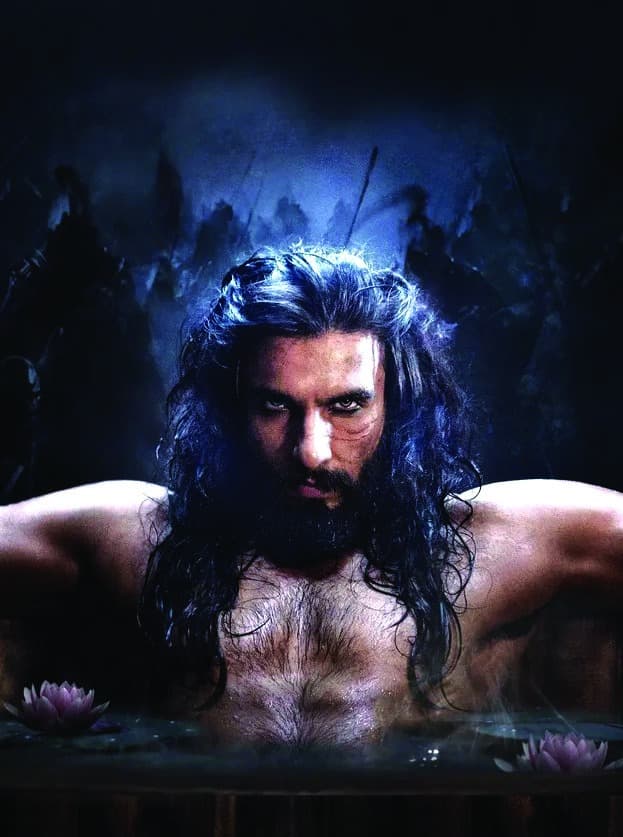
Ranveer Singh is Bollywood's unstoppable spark. Since 2010 he's blended fearless acting, boundless energy, and infectious charm — turning every role and room into something unforgettable, electric, and alive.
There are movie stars, and then there are phenomena. The distinction matters. A movie star is a person. A phenomenon is a condition — something that happens to the atmosphere around it, something that changes the temperature of whatever room it enters. Ranveer Singh has spent more than a decade being the latter, and it has cost him a great deal while giving him even more. He arrived in 2010 with Band Baaja Baaraat at a moment when Bollywood's leading man was still largely a managed proposition. The industry had its preferred mythology: controlled charisma, careful distance, and the manufactured suggestion of depth. Ranveer ignored all of it.
His early performances felt unscripted in the best sense, as though he were responding to a scene rather than executing it. His interviews felt unguarded. His enthusiasm, which could border on overwhelming, felt real. Where other actors cultivated mystique through absence, Ranveer cultivated connection through sheer presence.
“Where other actors cultivated mystique through absence, Ranveer cultivated connection through sheer presence. What followed was a body of work that steadily and seriously accumulated.”
The body of work
What followed was a body of work that steadily and seriously accumulated. Lootera showed he could embody stillness as effectively as energy. Bajirao Mastani gave him the scale of a historical epic, and he filled it. Padmaavat remains one of the most genuinely unsettling villain performances in recent Hindi cinema. Alauddin Khilji is rendered not as pantomime evil but as something hungrier and stranger. Gully Boy demanded an entirely different register — something interior and raw — and he found it. In 83, he disappeared so completely into Kapil Dev that the disappearance itself became the performance.
Taken together, these films represent a range that most actors spend an entire career pursuing. Yet the actor was always sharing space with the celebrity, and the celebrity had ambitions of its own.
The wardrobe as provocation
Long before personal branding became an industry unto itself, Ranveer understood something about the economics of modern fame: sustained attention is a form of capital. Every airport appearance was an event. Every fashion choice was a provocation. The wardrobe alone — those neon silhouettes, floral suits, skirts, and accessories that seemed to arrive from several possible futures simultaneously — generated debate that had nothing to do with any film and everything to do with keeping a name in circulation. Critics called it excess. Marketers called it genius. Both were probably right.
The controversies
Visibility, of course, is a double-edged instrument. The first serious firestorm came in 2015 through the AIB Knockout Roast. The format, imported from American television, placed Ranveer and Arjun Kapoor at the centre of a night of deliberately offensive comedy delivered by fellow celebrities. What the organisers intended as edgy entertainment, large sections of the public received as something else entirely. Police complaints followed. Politicians condemned it. Television spent days debating whether this kind of humour belonged in Indian public life at all.
In 2022, the nude photoshoot for Paper magazine arrived and generated the kind of heat that only India can produce at full volume. The photographs were artistic by intention, referencing classic Hollywood imagery, and their reception was immediate and divided. Supporters celebrated them as bold. Critics filed police complaints. Television gave the story extensive coverage. Yet what made the episode genuinely interesting was the conversation it forced open around its edges: questions about masculinity, double standards, and why a male celebrity presenting vulnerability might provoke a different reaction from a female celebrity doing something similar.
“This is the particular trap of a personality built on spontaneity: the archives are permanent, but the context is not. What is said in one cultural moment can be interpreted very differently in another.”
The controversy surrounding his recreation of a Daiva-inspired sequence from Kantara followed different logic. What appeared to be a tribute landed, for parts of the Kannadiga community, as something closer to appropriation. The backlash arrived quickly. Ranveer apologised and clarified that no offence was intended, and that clarification was probably genuine. Yet the episode illustrated a truth about performing in a country as culturally layered as India: symbols carry weight that good intentions alone cannot lighten.
The Don 3 situation
The most consequential dispute of recent years, however, concerns Don 3. When Ranveer was announced as the new face of the franchise, stepping into a role that Shah Rukh Khan had made his own across two films, the reactions were understandably intense. Iconic roles attract fierce loyalties. The deeper trouble came later, when reports surfaced that Ranveer had exited the project after significant pre-production work had already been completed. Producers spoke of substantial financial losses.
FWICE issued a non-cooperation directive against the actor, a move that headlines described as a ban, though FWICE subsequently clarified that it was a recommendation rather than a legal prohibition. The distinction was real, but the damage to the narrative had already been done. What the Don 3 situation exposed was less about one actor's decisions than about a Bollywood in transition — an industry increasingly concerned with contracts and professional accountability, where the old informal arrangements between stars and studios are being tested against harder structures.
The gift of friction
Ranveer found himself at the centre of that transition as well. That is, in a way, the Ranveer Singh story in miniature. He has a particular gift for finding himself at the centre of things, for being present at moments when culture is arguing with itself. This is not entirely accidental. It is, in part, the consequence of a personality that refuses to compress itself into safe dimensions. The same qualities that make him magnetic — his spontaneity, his scale, and his apparent inability to be anything less than fully himself in public — are precisely the qualities that generate friction.
What prevents the controversies from defining him is the work. Without performances that hold up, the spectacle would long ago have consumed the actor. Instead, the films remain, and they are good, and audiences remember them. He is disciplined and chaotic, calculated and impulsive, commercial and experimental. He carries contradiction the way most people carry a phone: constantly, and as though it were the most natural thing in the world.
“In an age when relevance is perhaps the scarcest and most coveted resource in entertainment, Ranveer Singh remains — stubbornly, fascinatingly, and exhaustingly — relevant. That may be the achievement that outlasts all the noise.”