Mukesh: The Voice That Broke Hearts
He was not the most technically flamboyant singer of his era. Yet Mukesh became one of the most unforgettable voices of Indian cinema because he had something rarer: an almost naked emotional honesty.
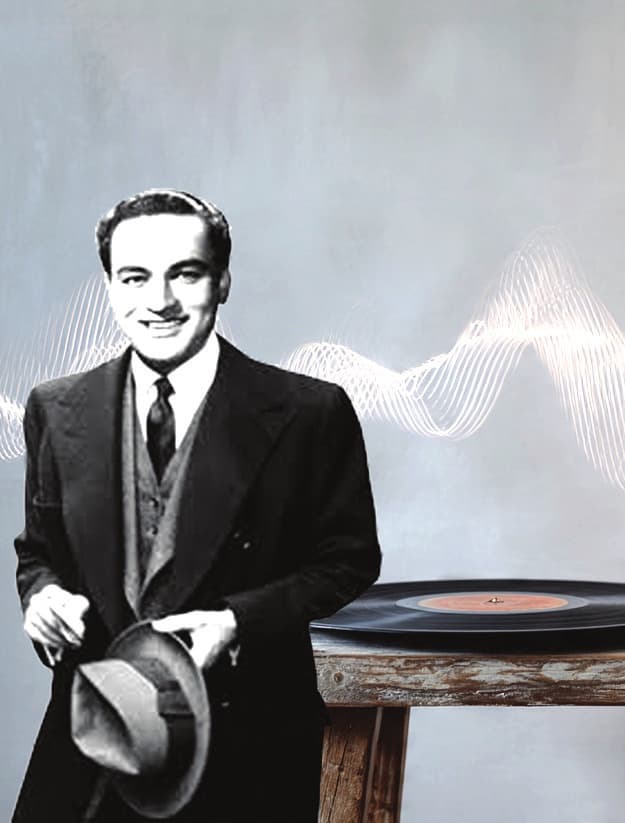
Mukesh was the voice of sorrow without melodrama. He carried natural ache in songs like Umar Qaid, Teesri Kasam, Parvarish, and became nostalgia itself with Mera Naam Joker. No harkats, no flourishes, just restraint. He didn't express pain, he revealed it, long enough to hurt, writes Manoj K Arora.
July is the birth anniversary month of Mukesh Chand Mathur or simply Mukesh. He was not one of the most technically flamboyant singers of his era, nor did he possess the classical virtuosity of Manna Dey, the elastic range of Mohammed Rafi, or the silken romanticism of Talat Mahmood. Yet Mukesh became one of the most unforgettable voices of Indian cinema because he had something rarer: an almost naked emotional honesty. His singing often sounded less like performance and more like confession.
Discovery and early voice
Mukesh was discovered by actor Motilal and he got him to start as an actor-singer, like K. L. Saigal. In fact, among his initial songs was the major hit Dil Jalta Hai To Jalne De (Pehli Nazar, 1945) which people still mistake for Saigal. It was composer Naushad Ali who helped Mukesh discover his own style. Gaye Ja Geet Milan Ke (Mela, 1948), Jhoom Jhoom Ke Nacho Aaj (Andaaz, 1949) brought out his true voice.
The Raj Kapoor years
And then Raj Kapoor and Mukesh discovered each other with Chhod Gaye Barsaat (Barsaat, 1949). Soon they became a pair. If Raj Kapoor was the Hindi cinema's eternal tramp, dreamer and common man, Mukesh became the inner voice of that man. Awara Huun (Awara, 1951) became a global anthem of the wandering underdog. Aaja Re Ab Mera Dil Pukara (Aah, 1953), Mera Joota Hai Japani (Shree 420, 1955), Kisi Ki Muskurahton Pe (Anari, 1959) were iconic songs exemplifying the greatness of the paired duo.
“If Raj Kapoor was the Hindi cinema's eternal tramp, dreamer and common man, Mukesh became the inner voice of that man.”
Songs of sorrow and longing
Mukesh was especially effective in songs of sorrow, longing and loneliness. His voice carried a natural ache. With Mujhe Raat Din Ye Khayal (Umar Qaid, 1961), Sajanawa Bairi Ho Gaye (Teesri Kasam, 1966), Aansu Bhari Hain (Parvarish, 1958) he conveyed betrayal without melodrama, instinctively maintaining the line between grief and dignity. And with Jaane Kahan Gaye Wo Din (Mera Naam Joker, 1970), he became the voice of nostalgia itself, looking back at lost applause, lost love and lost youth. Few singers could make sadness sound so intimate. He did not express pain; he revealed it.
Simplicity of expression
His music style was also marked by simplicity of expression. Mukesh rarely used excessive harkats, taans or ornamental flourishes. His singing was usually straight, clear and emotionally cantered. Chal Ri Sajni (Bambai Ka Babu, 1960), Main Toh Ik Khwab Huun (Himalaya Ki Gode Mein, 1965), Humne Tujhse Pyar Kiya Hai Jitna (Dulha Dulhan, 1964) show his skill of using restraint rather than outburst to bring out the core emotion of the song. He simply knew how to hold a note just long enough for it to hurt.
And a few of my all-time favourite songs. A song filled with joy of newly discovered love, Ye Din Kya Aaye (Chhoti Si Baat, 1976), a song of besotted restrain, Kayi Baar Yuun Bhi Dekha Hai (Rajnigandha, 1974), a son floating between resignation and hope, Zindagi Kaisi Hai Paheli (Anand, 1971). And of course, Mukesh's finest song Kahin Dur Jab Din (Anand, 1971), a deeply poetic song which Mukesh brilliantly kept conversational.
“Mukesh's contribution to Hindi film music lies not only in the number of hits he gave, but in the emotional vocabulary he created. He brought vulnerability. He represented the ordinary Indian man: hopeful, disappointed, honest, sometimes defeated, yet never cynical.”
Mukesh's contribution to Hindi film music lies not only in the number of hits he gave, but in the emotional vocabulary he created. He brought vulnerability. He represented the ordinary Indian man: hopeful, disappointed, honest, sometimes defeated, yet never cynical. His music does not dazzle like fireworks; it glows like a lamp in a lonely room. That is why, decades after his passing, his voice still feels close — as though it is not coming from a screen or a record, but from somewhere inside us. That makes even his technically simple songs difficult to imitate convincingly. Many can reproduce the tune, but very few can reproduce the truthfulness.
Manoj K Arora is a former civil servant.