Mahjong Mania
Across Delhi, Mumbai, Gurugram, Chennai and Bengaluru, the clatter of Mahjong tiles is replacing card shuffles. Why India's cities are falling in love with a 150-year-old Chinese game.
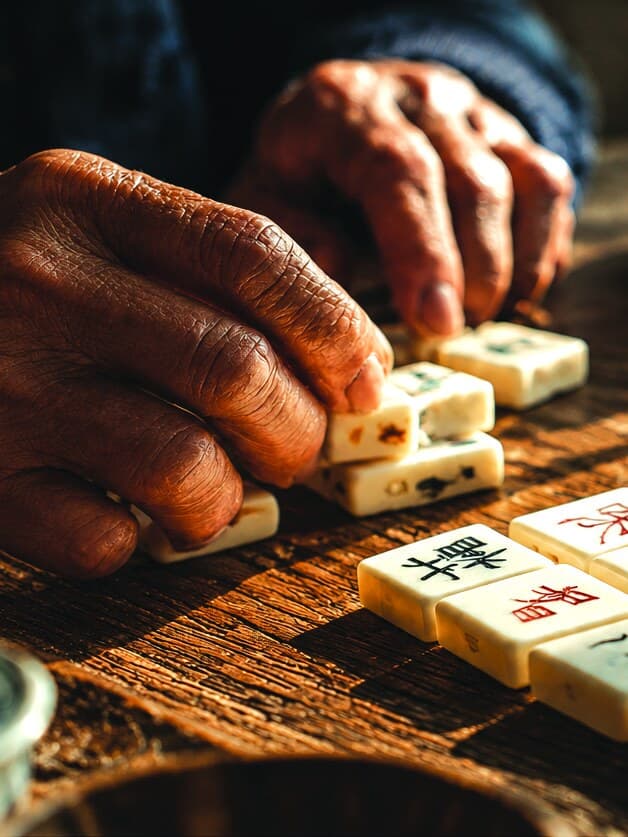
Across Delhi, Mumbai, Gurugram, Chennai and Bengaluru, the clatter of Mahjong tiles is replacing card shuffles. This 150-year-old Chinese game is drawing Indians to cafés and living rooms for strategy, conversation, and a rare chance to disconnect and reconnect face-to-face.
Some revolutions announce themselves with fanfare. Others unfold quietly, almost imperceptibly, until one day they are impossible to ignore. The growing popularity of Mahjong in India's metropolitan cities belongs to the latter category.
How people choose to spend their leisure time has always fascinated society. Ironically, even those glued to their smartphones scrolling endlessly through social media are curious about what their friends are doing offline. In Delhi, Gurugram, Mumbai, Chennai and Bengaluru, a new pastime is steadily capturing attention. In clubs, cafés and living rooms, the familiar shuffle of playing cards is giving way to the rhythmic clatter of ivory-coloured tiles. An ancient Chinese game, Mahjong is quietly becoming one of India's fastest-growing social and intellectual pursuits.
Beyond East Asian communities
Until fairly recently, Mahjong was largely confined to a small circle of enthusiasts in India. Many belonged to Army families or communities with historical ties to East Asia, where the game has long been part of the cultural fabric. That has changed dramatically.
Today, professionals, entrepreneurs, homemakers, retirees and young adults are discovering a pastime that offers something increasingly rare in the digital age — meaningful face-to-face interaction. While technology has made communication easier than ever, it has also made genuine social engagement less common. Mahjong offers an antidote. It combines strategy, conversation and companionship in a way few modern hobbies can.
“In an age of endless scrolling, Mahjong offers something refreshingly rare — a reason to put away the phone and reconnect with people.”
An ancient game with modern appeal
The game's appeal beyond Asia is not new. It found a devoted following in the United States during the early twentieth century, where its exotic origins and strategic complexity made it especially popular among women's groups and immigrant communities. More than a game, Mahjong became a social institution, bringing neighbours together and fostering lasting friendships. India now appears to be following a similar path.
Mahjong traces its origins to nineteenth-century China, although historians believe its roots may extend even further back. Played with 144 beautifully crafted tiles featuring Chinese characters, bamboo, circles, winds, dragons and flowers, the game is often compared with rummy. Yet the comparison barely scratches the surface.
Unlike many card games that rely heavily on luck, Mahjong demands sustained concentration, sharp observation and strategic thinking. Players must remember discarded tiles, anticipate their opponents' intentions, calculate probabilities and constantly adjust their tactics as the game unfolds. Success depends on recognising patterns, building winning combinations and making the right decisions under pressure. While fortune influences every game, skill almost always separates experienced players from beginners.
| Mahjong by the numbers | |
|---|---|
| Country of origin | China |
| Approximate age | Over 150 years |
| Players | Usually 4 |
| Tiles | 144 |
| Average game duration | 2–3 hours |
| Skills required | Memory, strategy, observation and probability |
| Fastest-growing Indian cities | Mumbai, Delhi NCR, Gurugram, Chennai and Bengaluru |
This rich blend of strategy and unpredictability explains why Mahjong has survived political upheavals, wars and changing social fashions for well over a century. It continues to evolve without losing its essential character.
More than entertainment
One of Mahjong's greatest strengths is that it offers benefits extending far beyond recreation. The game requires players to exercise memory, concentration, analytical thinking and decision-making simultaneously. Every discarded tile conveys information, every draw changes the strategic landscape and every move requires careful judgement.
Medical experts increasingly encourage people of all ages to engage in mentally stimulating activities alongside physical exercise, healthy eating and adequate sleep. While no game can prevent conditions such as Alzheimer's disease or dementia, activities that challenge the brain may help support cognitive health as people grow older. Mahjong provides exactly this kind of sustained mental engagement.
Perhaps equally important is its social dimension. Loneliness and social isolation have become significant challenges in modern urban life. Unlike solitary digital entertainment, Mahjong encourages conversation, laughter and genuine human interaction. A typical game lasts two to three hours, creating opportunities for friendships to deepen naturally around the table.
| Chess | Mahjong |
|---|---|
| Two players | Usually four players |
| Complete information | Hidden information |
| Long-term planning | Constant adaptation |
| Pure strategy | Strategy + probability |
| Silent game | Highly social |
| Little luck | Moderate luck, high skill |
Delhi NCR discovers Mahjong
Nowhere is this changing trend more visible than in Delhi NCR. What was once largely restricted to a handful of elite clubs and Army circles has expanded into a thriving community of enthusiasts. Coaching sessions are attracting newcomers eager to master the game, while private social groups regularly organise weekend Mahjong afternoons.
Unlike traditional card games, which are often associated with gambling, Mahjong enjoys a reputation as a game of intellect, patience and companionship. Winning is satisfying, but it is seldom the only objective. Many players value the conversations, friendships and mental stimulation just as much as the competition itself. This distinction has helped broaden Mahjong's appeal among families and professionals looking for a sophisticated yet relaxed leisure activity.
“From Delhi's elite clubs to Gurugram's trendy cafés, the click of Mahjong tiles is becoming the soundtrack of a new urban pastime.”
Gurugram adds its own style
As expected, Gurugram has embraced Mahjong in its own distinctive fashion. Lifestyle cafés, boutique clubs and premium hospitality venues have begun hosting themed Mahjong afternoons where strategy meets sophistication. Participants enjoy gourmet coffee, artisanal cuisine and leisurely conversation while immersed in a game that demands complete concentration.
These gatherings reflect a broader shift in urban lifestyles. Increasingly, people are seeking experiences rather than merely entertainment. Mahjong offers exactly that — a blend of intellectual challenge, social connection and understated elegance. For many participants, the game becomes less about winning individual rounds and more about creating an enjoyable shared experience.
Mumbai shows the way
If Delhi represents Mahjong's newest frontier, Mumbai remains its most established home in India. Several sports clubs and private members' clubs have hosted regular Mahjong sessions for years. Competitive tournaments now attract participants from across the country, while experienced players willingly mentor newcomers, ensuring that the community continues to grow.
Perhaps the game's greatest success in Mumbai lies in its ability to bridge generations. Grandparents teach grandchildren. Parents compete with their children. Families spend entire afternoons around the same table, each player equally absorbed in the game regardless of age. Few recreational activities today possess this remarkable ability to unite three generations under one roof. In a city where demanding careers and hectic schedules often leave little room for family interaction, Mahjong has become an unexpected bridge between the old and the young.
It is a reminder that some of life's richest conversations still happen not on digital screens, but across a table shared with family and friends.
Chennai and Bengaluru join the movement
The Mahjong wave is no longer confined to India's traditional metropolitan centres. Chennai and Bengaluru have also embraced the game, each in its own way. In Chennai, learning circles and neighbourhood groups have emerged over the past year, introducing newcomers to the game's nuances. What begins as a curiosity often develops into a regular social activity, with players meeting weekly to hone their skills and enjoy each other's company.
Bengaluru, with its cosmopolitan workforce and technology-driven lifestyle, has found in Mahjong a welcome counterbalance to digital living. Professionals who spend their working day in front of computer screens increasingly seek hobbies that offer intellectual stimulation without involving another device. Mahjong fits the bill perfectly. It is strategic, absorbing and, above all, deeply social.
As India's cities become more digitally connected, people are paradoxically searching for opportunities to disconnect. Mahjong provides that rare chance to switch off notifications, put away smartphones and engage in uninterrupted face-to-face conversation.