Beyond Charity: Why India Must Build Communities, Not Dependence
As India eyes 2047, true progress lies not in charity but in empowered communities. Abhinandan Educational & Welfare Society makes the case for shifting from aid to agency, where dignity, local leadership and integrated action build self-reliant people.
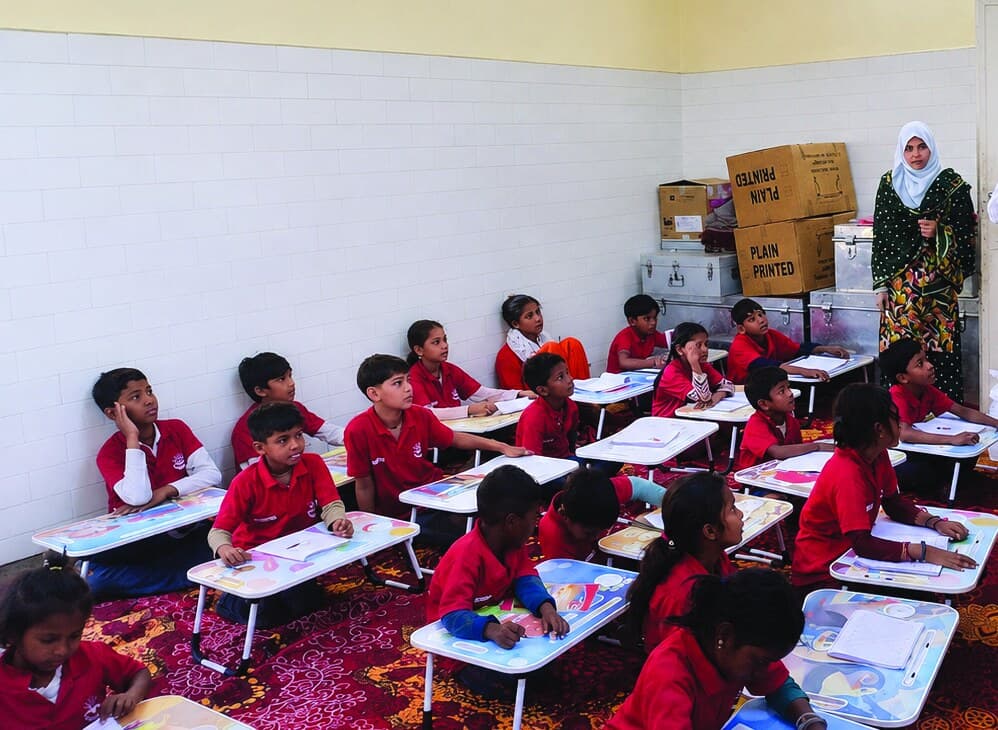
As India eyes 2047, true progress lies not in charity but in empowered communities. Abhinandan Educational & Welfare Society emphasis on shifting from aid to agency, where dignity, local leadership, and integrated action build self-reliant people who drive their own transformation, not dependence.
As India advances towards its aspiration of becoming a developed nation by 2047, the conversation around social development must move beyond the familiar vocabulary of charity and welfare. While philanthropy has long played an important role in addressing immediate needs, the country's next developmental leap will depend not on how much aid reaches vulnerable communities, but on whether that aid enables them to become self-reliant.
Across India, a new generation of development practitioners is challenging the conventional understanding of social work. Among them are leaders such as Manisha Bhatia, Founder and CEO of Abhinandan Educational & Welfare Society, who advocate a model in which communities are not passive recipients of support but active architects of their own progress. This philosophy reflects a broader shift taking place across India's development sector, one that prioritises dignity, participation and long-term resilience over dependency.
“For decades, development interventions have largely been measured through numbers: children enrolled, meals served, women trained, or households reached. These indicators matter, but they often fail to answer a more fundamental question: Did people's lives change in a way that allowed them to shape their own future?”
For decades, development interventions have largely been measured through numbers: children enrolled, meals served, women trained, or households reached. These indicators matter, but they often fail to answer a more fundamental question: Did people's lives change in a way that allowed them to shape their own future?
The distinction between assistance and empowerment is critical.
A child who receives school supplies for a year certainly benefits. But a child who receives quality education, emotional support, family engagement and a safe learning environment acquires something far more valuable: the ability to break the cycle of poverty. Likewise, vocational training for women has limited impact unless it is accompanied by financial literacy, market access, confidence-building and opportunities for entrepreneurship. Development becomes sustainable only when individuals gain agency over their own lives.
India's development challenges are deeply interconnected. Educational exclusion is often linked to migration, poor health, inadequate livelihoods, gender inequality and environmental vulnerability. Addressing these issues through isolated programmes rarely produces lasting outcomes. Instead, the country requires integrated, community-based models in which education, livelihoods, health, environmental stewardship and local leadership reinforce one another.
Some civil society organisations have already begun demonstrating what such an approach can look like. Through initiatives that combine education, women's economic empowerment, youth leadership and environmental sustainability within the same ecosystem, organisations such as Abhinandan Educational & Welfare Society illustrate how development can become transformative rather than transactional. Their work underscores an important lesson: when communities participate in designing solutions, interventions are more likely to endure beyond project cycles.
Equally important is the recognition that women and young people are not merely beneficiaries of development but its most effective drivers. Women's economic participation improves household incomes, children's education and community well-being. Young leaders bring innovation, digital skills and civic engagement that are essential for addressing emerging social challenges. Investing in both groups creates multiplier effects that extend across generations.
The role of partnerships is also becoming increasingly significant. Governments alone cannot solve complex developmental challenges, nor can civil society or corporate philanthropy operate in isolation. The future lies in collaborative governance, where public institutions, businesses, academic institutions and community organisations contribute their respective strengths while remaining accountable to local communities. Such partnerships can shift CSR from cheque-writing to long-term institution-building.
Technology, too, offers unprecedented opportunities. Digital platforms can improve learning outcomes, strengthen programme monitoring, increase transparency and enable evidence-based policymaking. Yet technology must remain a tool rather than an end in itself. Without community ownership, even the most sophisticated digital solutions risk becoming temporary interventions.
As India prepares for the next quarter century of nation-building, its development discourse must embrace a simple but transformative idea: people are not problems to be solved; they are partners in creating solutions. As Manisha Bhatia has often emphasised through her work, sustainable development begins when dignity, opportunity and local ownership become the foundation of every intervention, rather than its eventual outcome.
The future of inclusive growth will therefore be determined not by the scale of charity, but by the strength of communities. India's greatest development success will not be measured by the number of programmes it launches, but by the number of communities capable of leading their own transformation. That is the shift the nation must now embrace: from delivering services to building capabilities, from welfare to empowerment, and from charity to transformation.